General Knowledge
Nobel Prizes from an Indian Perspective

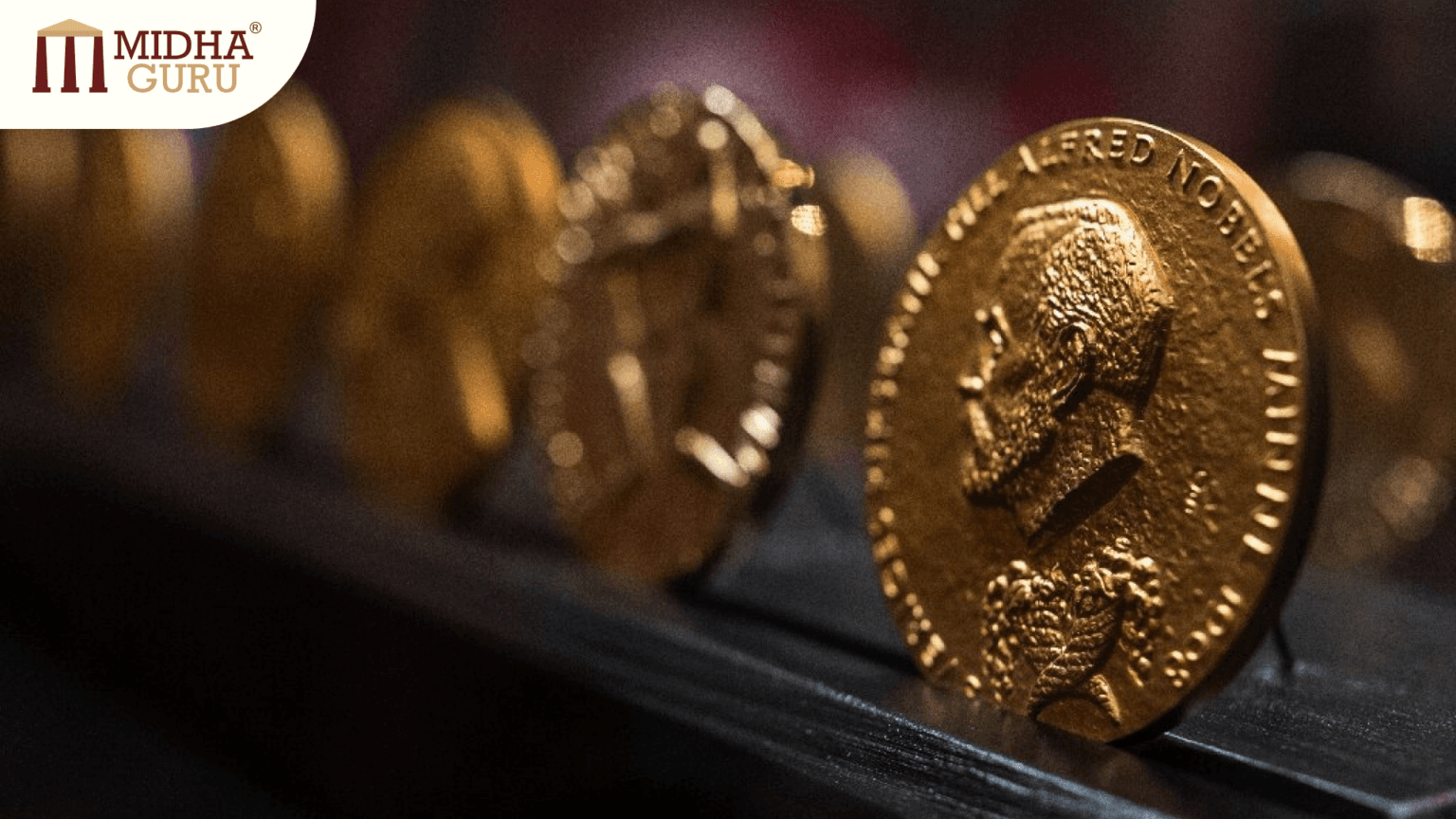
The Nobel Prize was constituted in 1895 by a Swedish inventor through his will. It is one of the world’s most distinguished international awards that cut across disciplines such as Peace, Literature, Physics, Chemistry, Medicine, and Economic Sciences. These awards go back centuries, awarding people and entities that have made excellent contributions to humankind. India has had its associations with the Nobel Prize rich and storied with several disciplines reflective of the vibrant contribution of the nation to global progress.
Indian Nobel laureates do not only bring glory to their motherland but also carve out the course of their particular field through their work. Now let’s look closer at some of the outstanding works of Indian Nobel laureates and what the prize means in India.
The First Indian Nobel Laureate: Rabindranath Tagore
The journey of India with the Nobel Prize starts from 1913 when Rabindranath Tagore was awarded for the first time for producing pioneer work in literature. His collection of poems, Gitanjali, moved the hearts of people worldwide and won him international recognition for deep philosophical insights and mastery in lyrics.
Tagore’s victory consolidated international recognition of India as a center for both cultural, intellectual, and artistic achievement. The victory also marked the deep cultural depth of literature in India as well as introduced the legacy that would inspire the next generation of Indian writers and poets.
C.V. Raman and the Nobel Prize in Physics
He was a brilliant physicist who emerged as India’s second Nobel laureate and the first Indian Nobel laureate in Physics in 1930. His discovery is known as the Raman Effect or the scattering of light upon its passage through a transparent material. It entirely transformed the understanding of molecular and atomic structures and therefore laid down its very foundation for most technological innovations in the field of optics.
C.V. Raman’s Nobel victory made India scientifically victorious for an hour. it also accredits credentials in the science world that are surging for the country. Every year 28th February is celebrated as National Science Day to mark the discovery of ‘Raman effect”.
Mother Teresa: The Nobel Peace Prize
She was posthumously awarded the Nobel Peace Prize in 1979 as a Catholic nun who had spent most of her life to end poverty and suffering in India. she was born in Albania. She devoted her life to the “poorest of the poor” through her organization, the Missionaries of Charity, based in Kolkata. Her humanitarian works and selfless services touched the hearts of people all over the world. And it was a call from the Nobel Prize to recognize her humanitarian measures.
Amartya Sen: Nobel Prize in Economic Sciences
In the year 1998, Amartya Sen received the Nobel Memorial Prize in Economic Sciences for his works on welfare economics. Sen’s works on poverty, development, and social justice completely transformed the economic theory. So it had a global impact at the policy-making levels. His work focused much on the issues of inequality and resource distribution. His “capability approach” became the appropriate frame of reference with regard to human development.
At the time, Amartya Sen was awarded his Nobel Prize, and international media in one swoop moved towards the economic problems of developing countries and thus towards the Indian case.
Indian laureates in medicine
A path-finding Indian molecular biologist, Har Gobind Khorana, has received the Nobel Prize in Physiology or Medicine in 1968. it was for his discovery related to the genetic code and the application of that knowledge to protein synthesis.
All this work helped in unraveling the biology of DNA and RNA, which eventually laid down a foundation for further discoveries related to applications in genetic engineering and biotechnology.
Khorana brought into the limelight many other contributions that were medically made across the world by Indians, spun by the scientific world.
Kailash Satyarthi: Nobel Laureate in Child Rights Activism
Kailash Satyarthi, an Indian child rights activist received the Nobel Peace Prize in 2014. A militant crusader, Satyarthi is regarded as a savior for thousands of children who have been rescued from bonded labor and exploitation. Since the movement was launched in India, he has rescued hundreds of thousands of bonded laborers. He heads the “Bachpan Bachao Andolan” (Save the Childhood Movement). His efforts have changed thousands of lives in India and have inspired global human rights work.
Thus, Satyarthi’s Nobel Prize has shown the power of influence that India exerts on the perception of human rights and social justice. Satyarthi’s work remains vitally important in society, where child labor and educational inequality prevail.
India Nobel Contenders: A Catalyst for Future Success
India had many laureates; yet, it is still striving for excellence in all its concerns – science, literature, economics, and humanitarian efforts. The Nobel Prize represents global recognition of individual achievement, but it reflects the growing influence and intellectual contribution by Indian citizens to the world.
India, within the last decade or so has accelerated the focus of research and advancement in science and technology and social development immensely. Indian institutions now go on to produce world-class scholars, researchers, and innovators who shall most certainly fight for the Nobel Prize when the day comes.
Conclusion
India’s Journey with the Nobel Prize reflects not only the achievement of the individual laureates but also that of the aspirations of a country to stand tall around the globe. As India grows to be a world force in the sciences, economics, literature, and peace building, the Nobel Prize stands as an apt symbol of its potential. It would live from generation to generation to strive harder in making invaluable contributions on the paths of human progress and development.